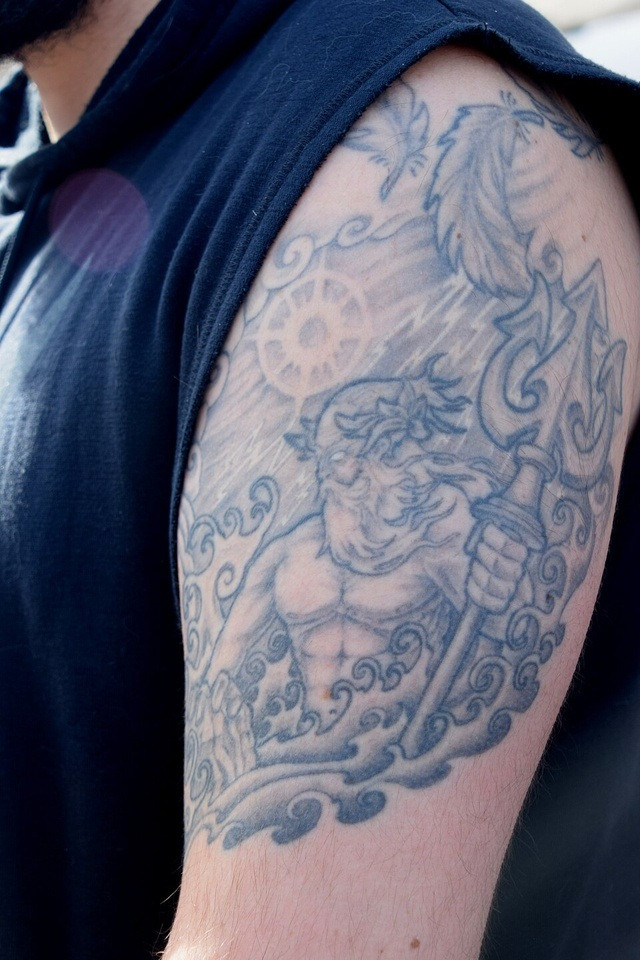
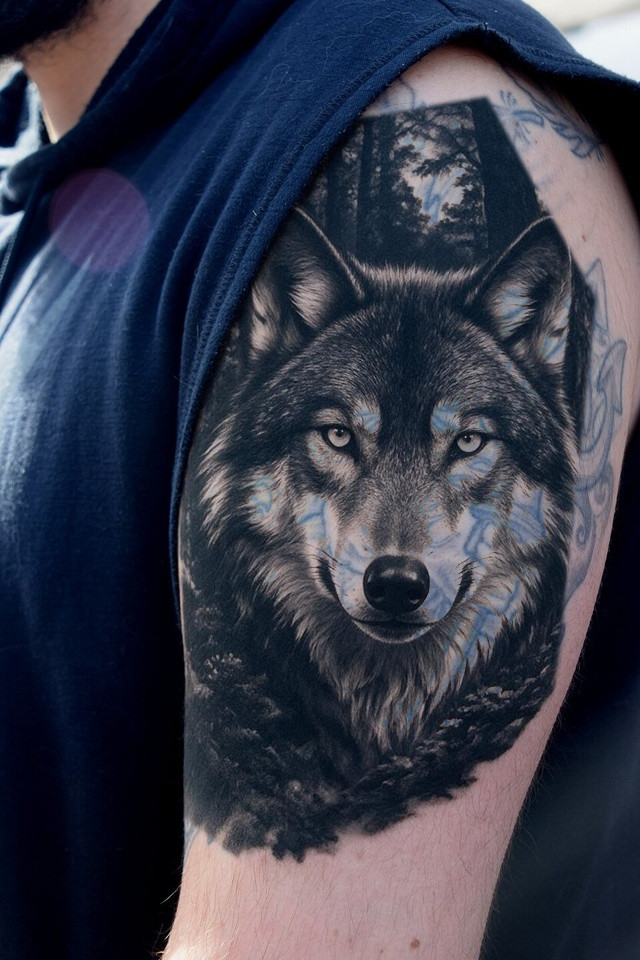
3 decisions before going darker
- Define the boundary — Compare exactly where the solid area starts and stops on your body. A border that looks tidy in a cropped image may feel different at full scale.
- Protect intentional open skin — Negative-space patterns need genuinely available space. Placing a light opening over old ink does not make that ink disappear.
- Discuss the long-term plan — Ask the artist about the session plan, healed examples and future changes before choosing the largest solid option. A preview cannot evaluate skin suitability.
Three levels of dark composition
Dark background
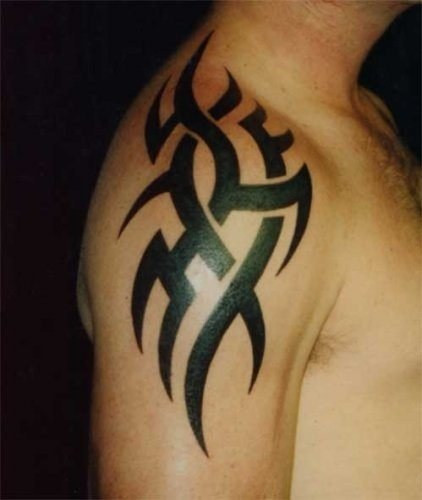
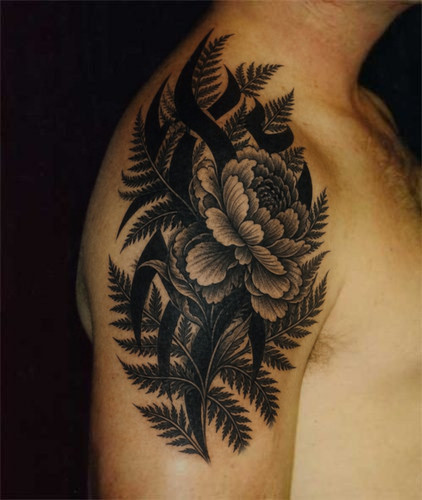
Keep an identifiable floral or animal subject, with darker ground arranged over the original tattoo.
Shaped blackwork
Explore bold ornamental sections or an irregular botanical silhouette instead of filling the entire surrounding area.
Broader blackout
Compare the whole limb or body area in the photo. Review the outline and transitions with an experienced artist in person.
What should I ask about cost?
Request a quote for the full planned area and appointments, and clarify what follow-up is included. A solid-looking digital fill does not show the work or healing involved in tattooing it.
Use the cover-up quote checklist.
Is blackout my only option?
Ask an artist to compare a darker subject-based cover-up, a partial rework and a blackout. If your preference is for a lighter outcome, discuss a dermatologist's assessment for fading as a separate option.
AI concepts are planning references. Your artist must assess and adapt the design; the preview is not a promise of coverage or a medical assessment.
FAQ
Are blackwork and blackout the same thing?
Here, blackwork describes designs built from black shapes and linework; blackout describes a broader solid-filled area. Ask your artist to define the exact composition they are proposing.
Can a white design simply cover solid black?
Do not use a bright AI overlay as proof of that result. Discuss healed examples and what is realistic on the actual old tattoo with your artist.