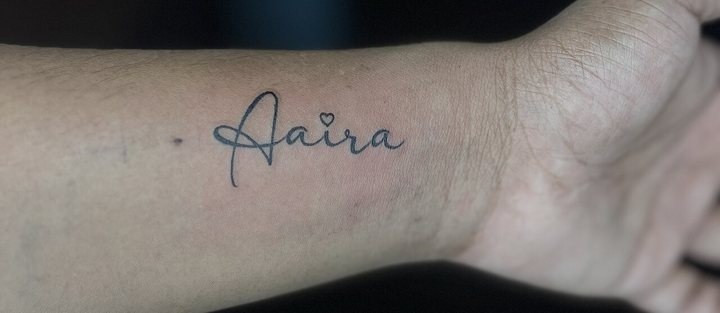
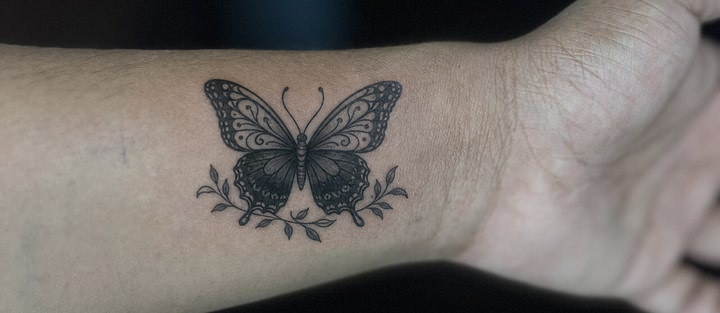
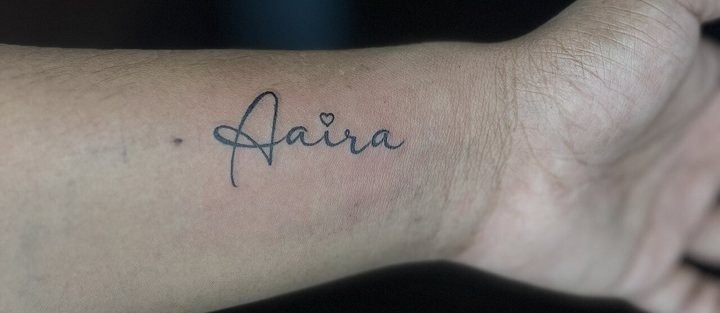
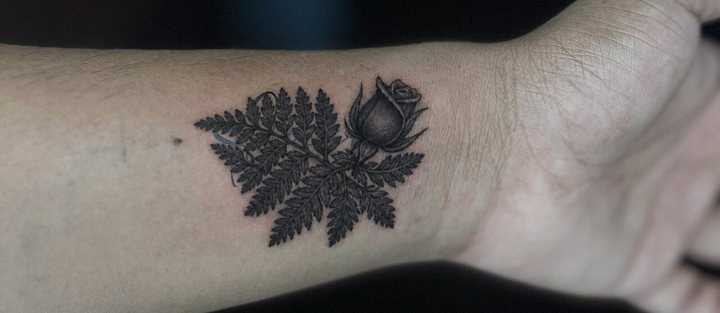
3 rules for covering a name
- Leave room beyond the name — A wider composition gives an artist space to place letters inside shading rather than open skin. The right size depends on the actual lettering.
- Put dark elements over the letters — Leaves, feathers and petals' shadows offer places to incorporate the darkest strokes. Check each letter, including dots and flourishes.
- Question very light designs — Fine line and watercolor concepts may look clean on screen while leaving dark lettering visible. Compare the concept with the honest preview.
Ideas by size
Wrist / small
Dense botanical sprig, black swallow, small blackwork band.
Forearm / medium
Black & grey rose, feather, compass with dark ground.
Chest / large
Peony cluster, panther, mandala with blackwork fill.
How much does a name cover-up cost?
Ask for a quote based on the full name, the proposed design and its finished size. A small name can still need a larger composition; the digital preview does not set the tattoo artist's price.
Use the cover-up quote checklist.
Should I do laser first?
If you want a much lighter design than the existing lettering allows, discuss fading with a dermatologist and the cover-up artist. A preview cannot tell you how many treatments you need or whether laser is suitable.
AI concepts are planning references. Your artist must assess and adapt the design; the preview is not a promise of coverage or a medical assessment.
FAQ
Can I cover a name with another name?
Lettering over lettering can leave both names difficult to read. Ask an artist to map the old strokes; an image with shaded areas may give them more options.
Can a fine-line tattoo cover a name?
It depends on how faded the name is and where the new lines sit. A fine-line concept is not evidence that dark letters will disappear after tattooing.