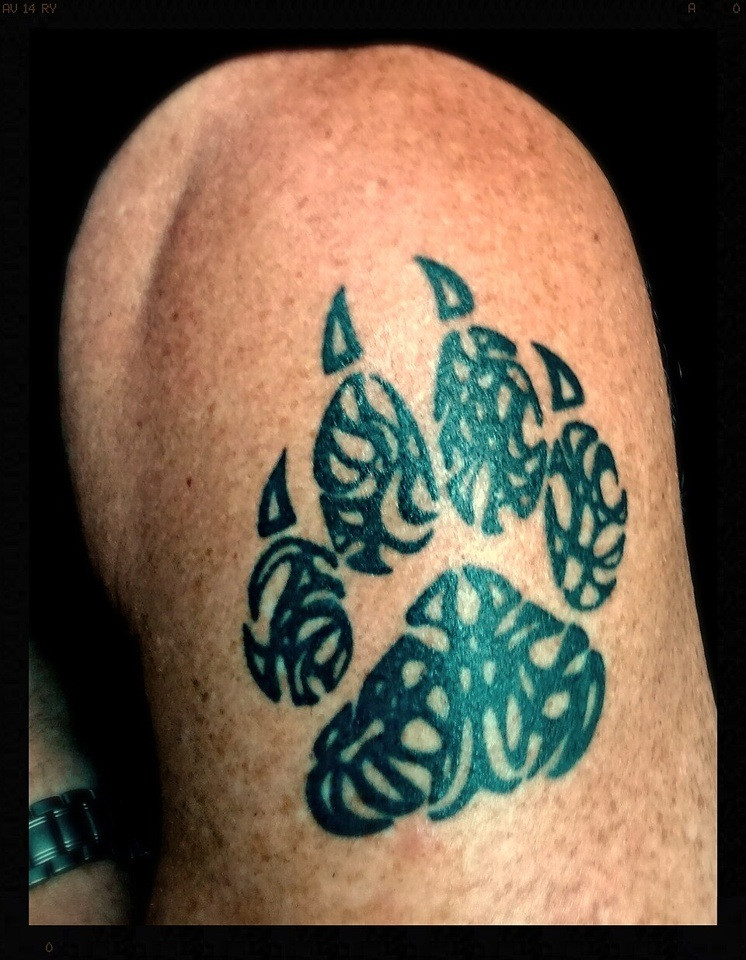
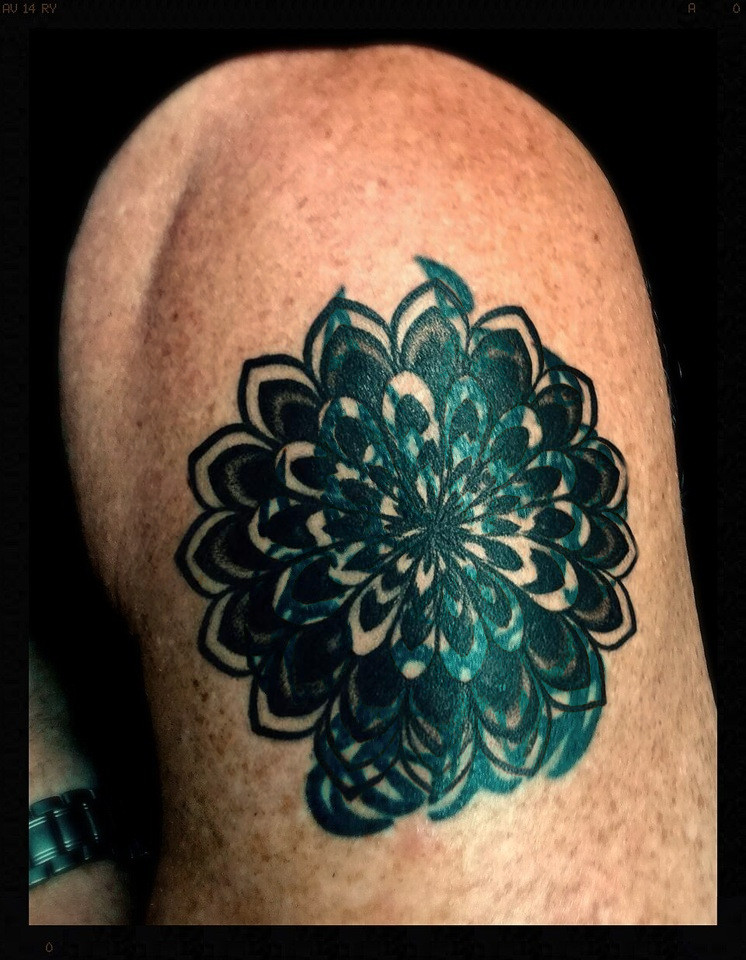
3 checks around the shoulder cap
- Locate the old tattoo on the curve — Use front, side and back views with the arm relaxed. Show where the old edges move out of sight so the artist can plan the complete surface.
- Place the focal point deliberately — Decide whether the main subject should face forward, outward or toward the back. Keep its lighter features away from old solid areas whenever the composition allows.
- Choose each connecting edge — Agree on the boundary at the neck, chest, back and upper arm. A design can stay on the cap or connect to those areas; neither should happen by accident.
Three shoulder structures to compare
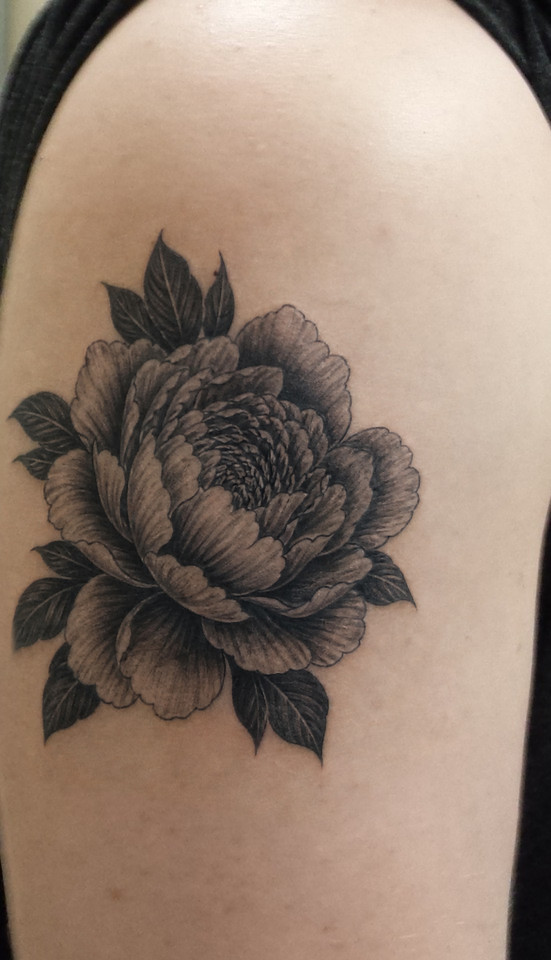
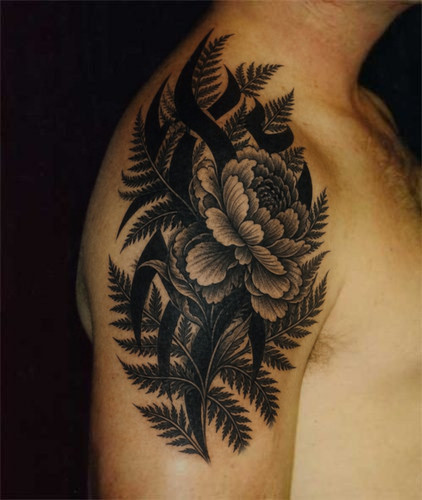
Layered floral cap
Try overlapping blooms with darker foliage following the old outline. Compare the front and back edges rather than centering every petal in one view.
Animal with dark surround
Position the face on a readable surface and use mane, fur or background around the old tattoo. Review the result with the arm resting naturally.
Shoulder-to-arm composition
Explore a flowing ornamental or Japanese-inspired layout if the old design already drops down the upper arm, with a deliberate endpoint for the new piece.
What should I ask about cost?
Request a quote for the full shoulder boundary and any extension to the upper arm, chest or back. Ask how a retained old section differs in scope from a complete replacement.
Use the cover-up quote checklist.
How should I review the design on my body?
Review the stencil in a relaxed standing position from the front, side and back. Explain which view matters most to you and ask the artist to show how the design connects around the cap; the flat AI concept is only an initial reference.
AI concepts are planning references. Your artist must assess and adapt the design; the preview is not a promise of coverage or a medical assessment.
FAQ
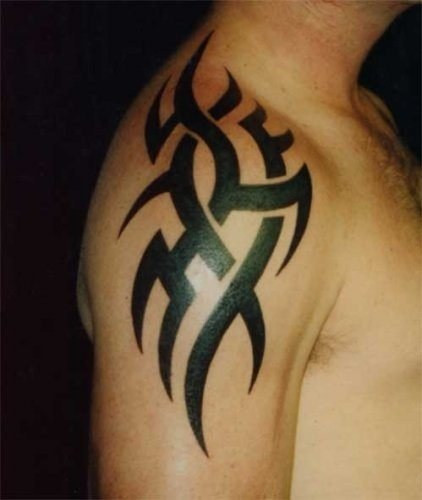
Can I cover a tribal shoulder tattoo without extending down the arm?
A contained design is an option to assess, but the old tribal's lowest points still need to fit inside it. Compare the proposed cap boundary with every old edge.
Does a shoulder cover-up have to be round?
No. A diagonal or flowing composition can continue toward the arm, chest or back. Choose the silhouette and boundaries before using detail to fill the area.