3 rules for a lower-back redesign
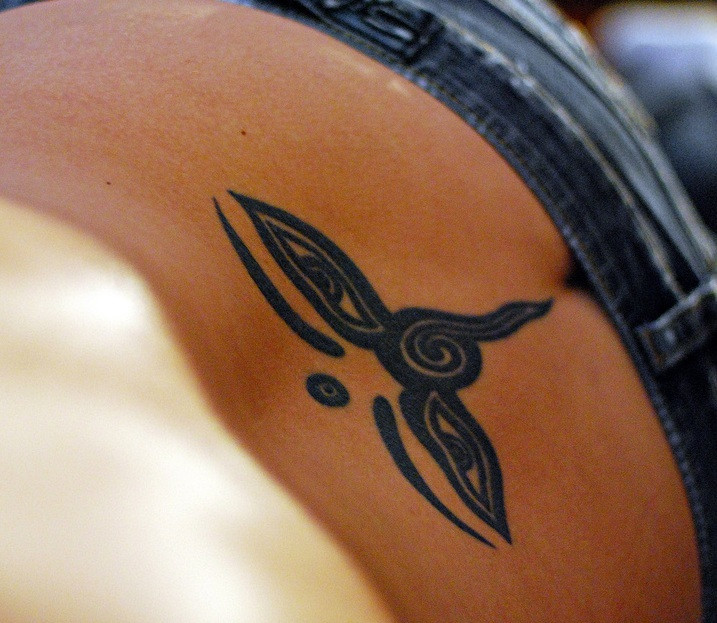
- Use a full-width photo — Show both ends of the existing tattoo, the spine and nearby skin. An angled mirror photo can distort the symmetry and apparent size.
- Choose a center deliberately — Decide whether the new focal point should stay on the spine or move to one side. The old design's center does not have to dictate the new composition.
- Plan the outer tips — Long tribal points can remain visible beyond a central flower. Ask where each tip fits inside the new shading before approving the outline.
Ways to reshape a wide tattoo
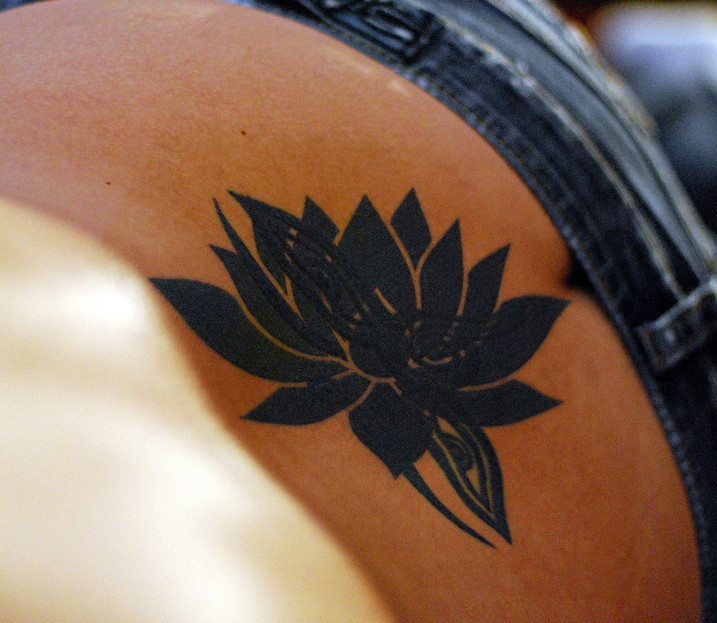
Balanced floral cluster
A central flower with darker leaves extending outward can relate to a symmetrical old design without repeating its outline.
Asymmetric branch
Compare a branch that travels toward a hip, giving the old horizontal shape a new direction.
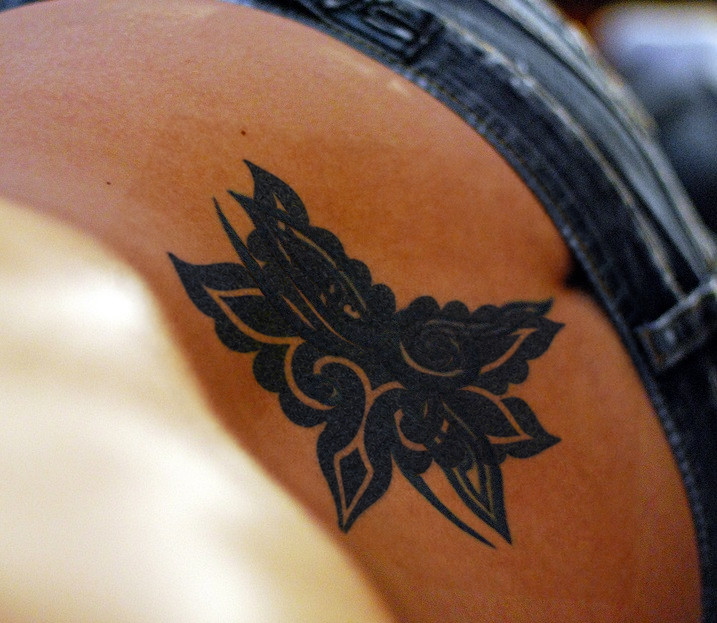
Ornamental panel
Use deliberate dark sections around the old marks; inspect any light or open pattern against the original ink.
What should I ask about cost?
Request a quote for the final width and height, including any extension toward a hip or up the back. Bring a measurement and ask how the design is checked with you standing naturally.
Use the cover-up quote checklist.
Rework or complete cover-up?
If you still like part of the tattoo, compare a rework that retains it with a full cover-up. An artist can map what is worth keeping and whether a larger design matches your preferred silhouette.
AI concepts are planning references. Your artist must assess and adapt the design; the preview is not a promise of coverage or a medical assessment.
FAQ
Does a lower-back cover-up need to be symmetrical?
No. Symmetry is one option. An asymmetric composition can work with a different focal point, provided the original tattoo's outer edges are accounted for.
Can I cover only the middle of an old lower-back tattoo?
You can discuss a partial rework, but the remaining elements need to belong to the finished composition. Ask the artist to draw the complete plan rather than evaluate one cropped section.