3 ways to assess a compact cover-up
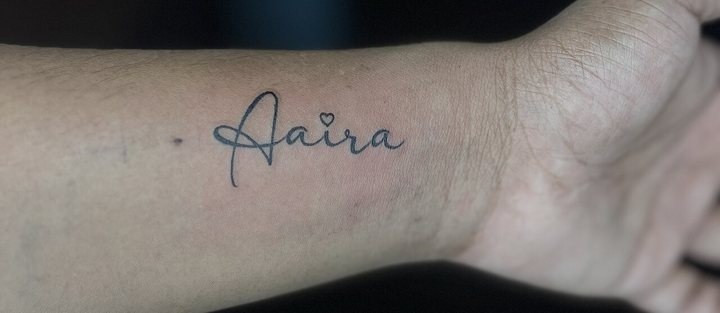
- Measure all of the old tattoo — Include faint dots, flourishes and blurred edges. Those small marks can sit outside a replacement designed around only the bold center.
- Compare two sizes — Try a compact motif and a slightly expanded version. The larger option may give the artist a clearer focal point and room to incorporate the old outline.
- Avoid detail as camouflage — Many tiny lines do not automatically hide a dark symbol. Check whether the darkest parts of the new design actually align with the old ink.
Compact directions to compare
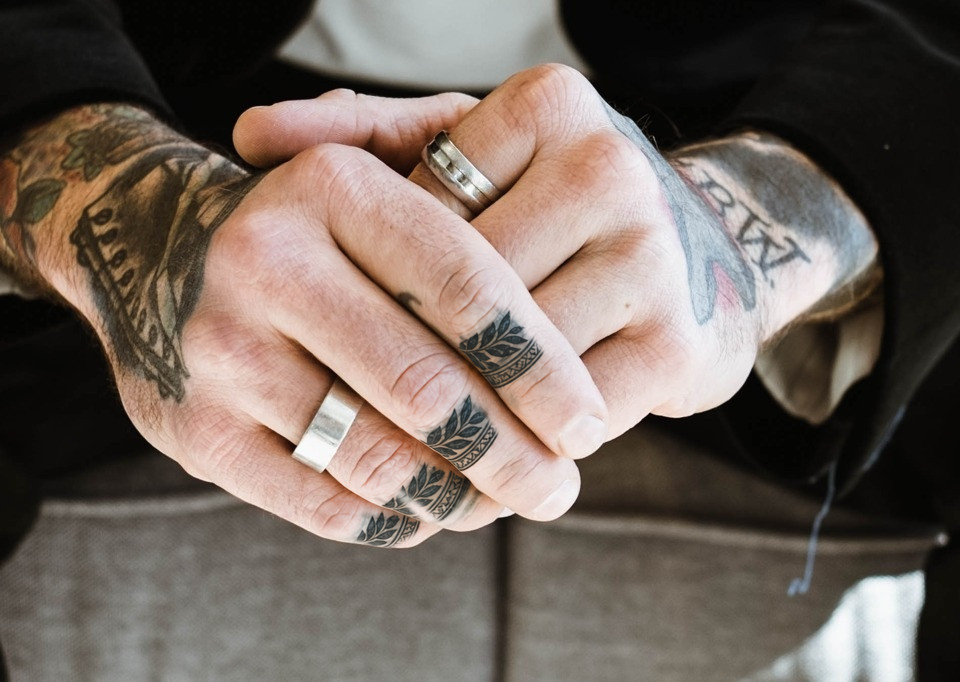
Leaf cluster
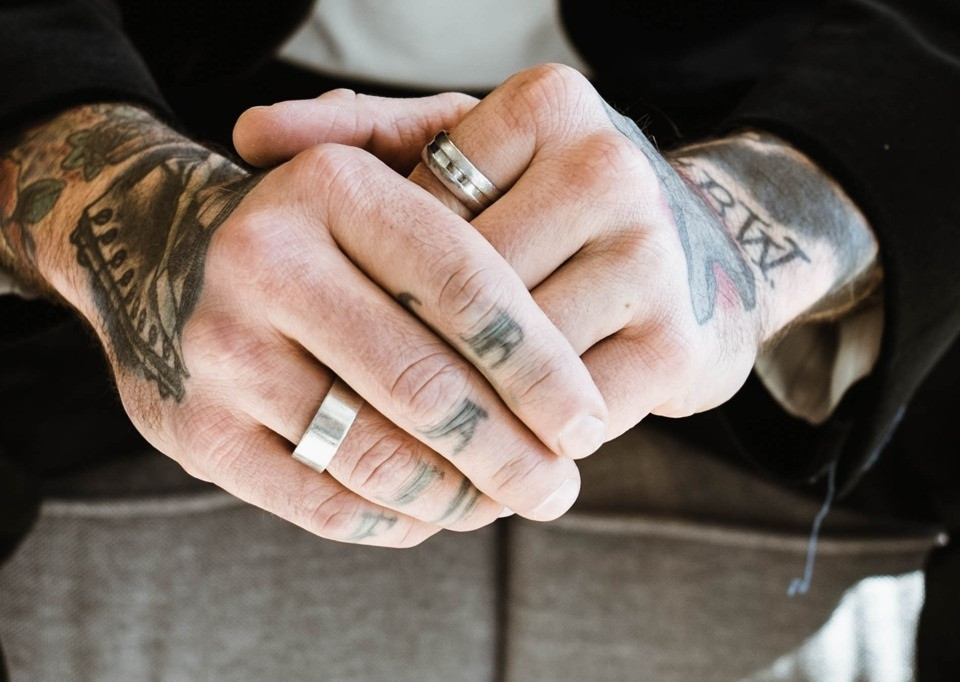
Useful to explore for narrow names or scattered small marks, with individual leaves arranged over the old strokes.
Solid silhouette
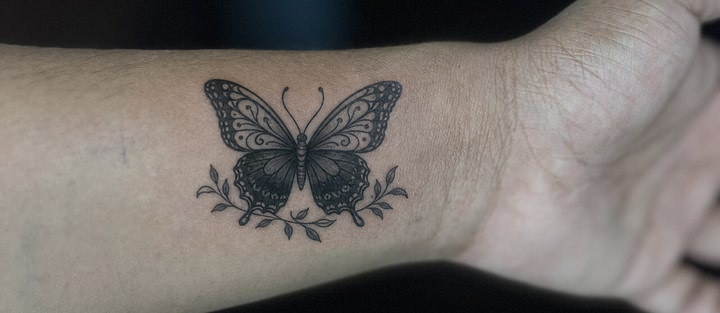
Compare a swallow or another bold shape whose filled section can contain the old symbol without an awkward outline.
Small floral + ground
A flower with a controlled patch of darker foliage can offer more coverage structure than an isolated open bloom.
What should I ask about cost?
Ask about the studio's minimum charge, design time and proposed finished size. A small area does not establish a price or a guaranteed single-appointment cover-up.
Use the cover-up quote checklist.
How small can the new design stay?
That depends on the old shape, its darkness and the proposed motif. Bring a measured photo and agree on the maximum area you are comfortable covering; an artist can explain the trade-offs at that size.
AI concepts are planning references. Your artist must assess and adapt the design; the preview is not a promise of coverage or a medical assessment.
FAQ
Can the new tattoo be the same size as the old one?
Sometimes a rework can stay close to the old footprint, but a full cover-up may need more space. Ask an artist to map the edges instead of applying a fixed size multiplier.
Can I use a tiny fine-line design?
A delicate concept may leave a compact dark tattoo visible. Compare the old marks against the new design's open areas and get an artist's assessment before booking.