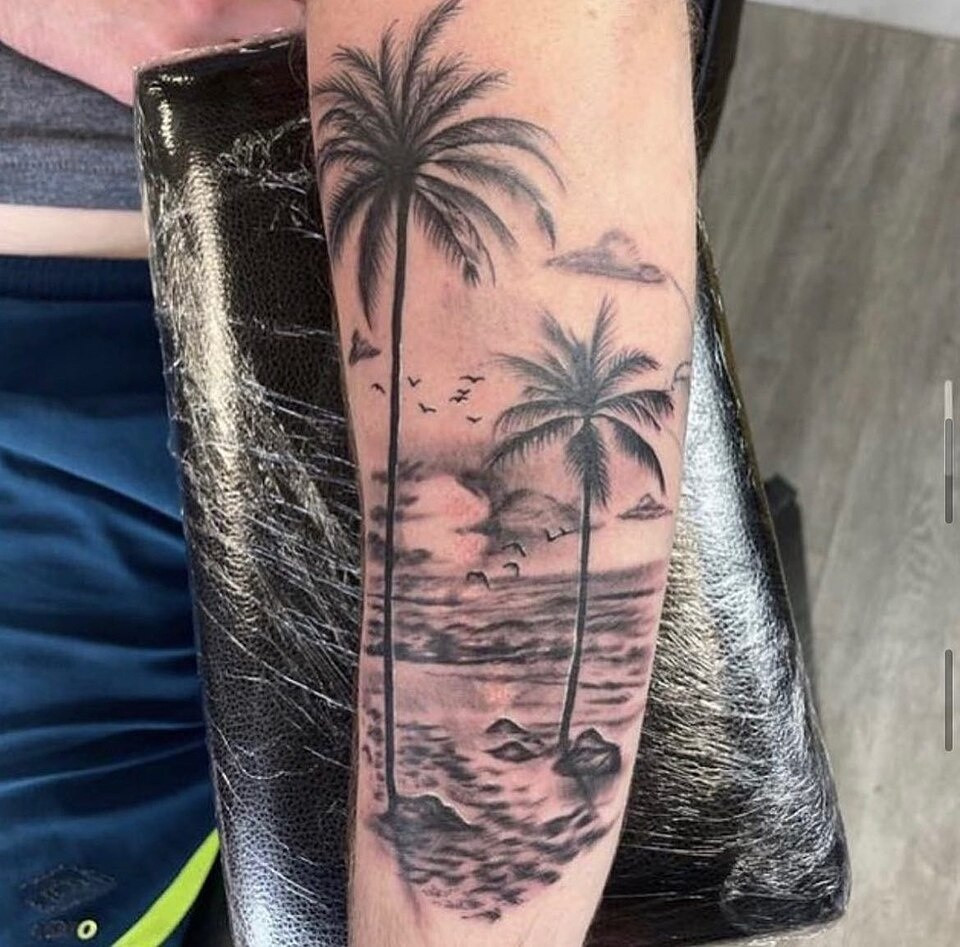
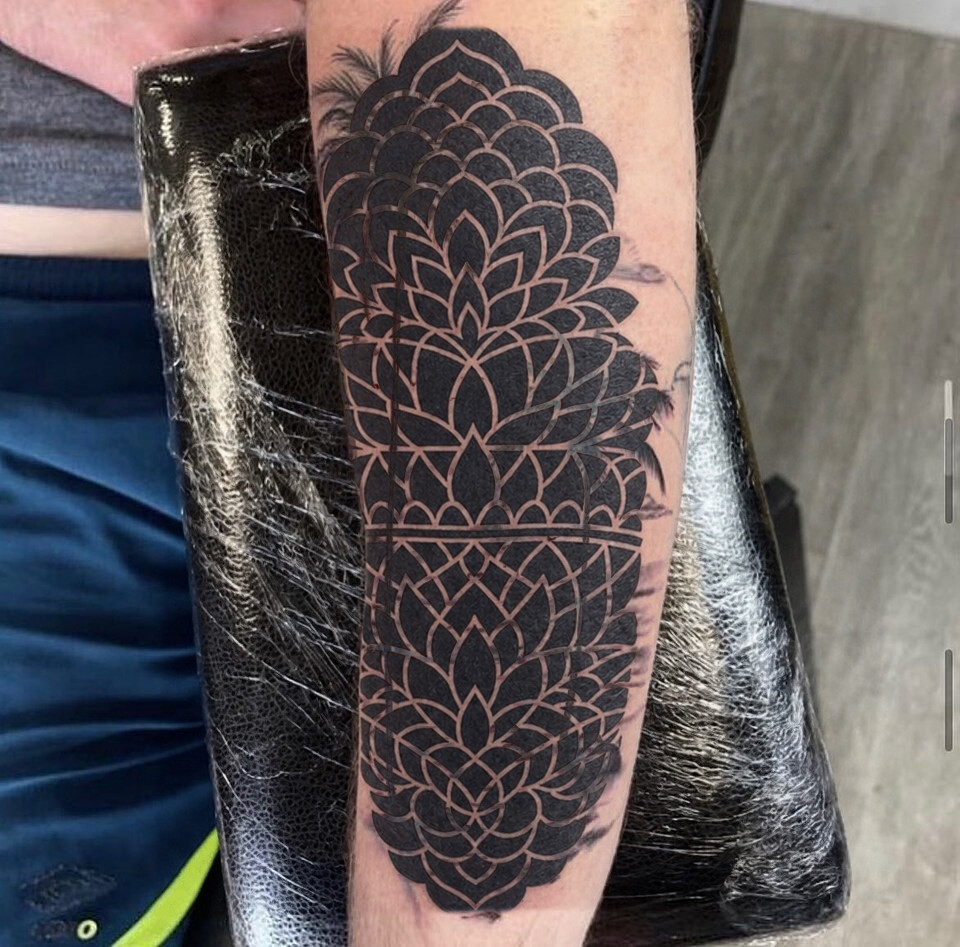
3 rules for a forearm layout
- Check the arm in rotation — Bring photos with the palm facing up, down and inward. These views help the artist find lettering or tribal points that disappear behind a front-facing concept.
- Choose a wrist-to-elbow direction — Compare a lengthwise subject with a diagonal composition. Decide which end is the focal point and where the design should stop near the wrist and elbow.
- Plan the seam of a wrap — If the design connects around the forearm, agree on how its edges meet. A band of unrelated dark filler can solve a flat preview while leaving an awkward full-arm composition.
Three ways to use forearm space
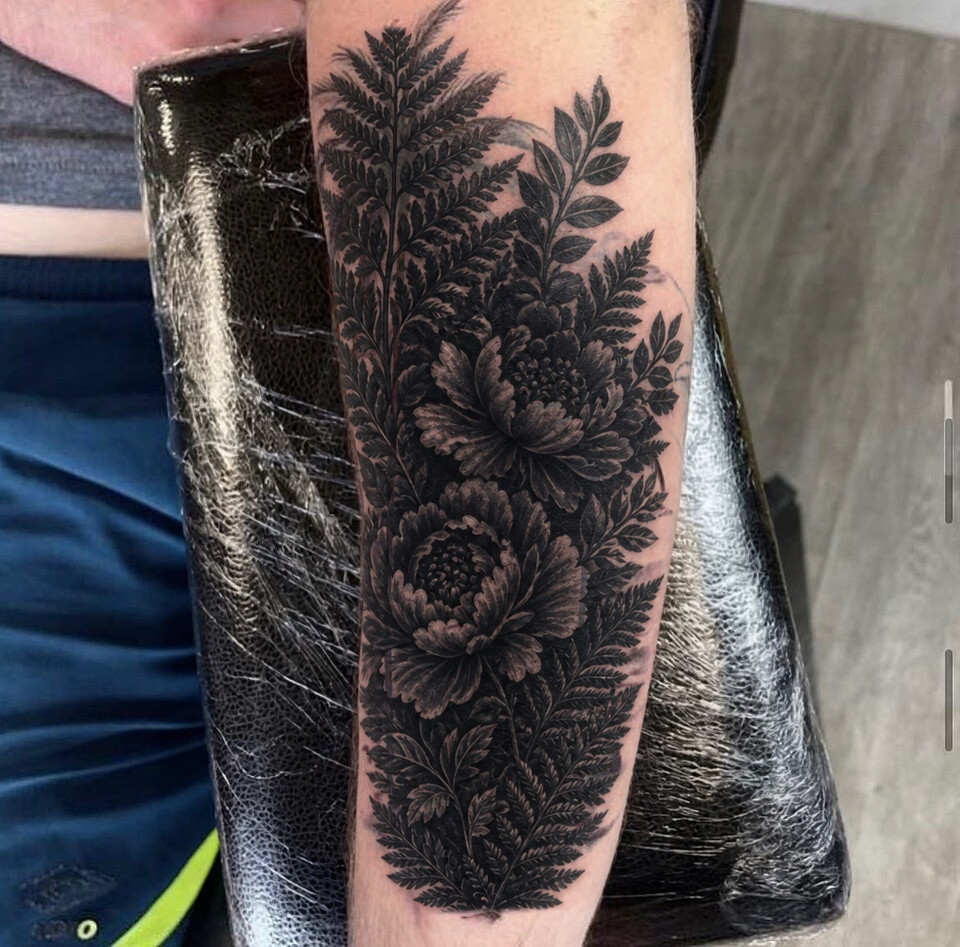
Vertical botanical
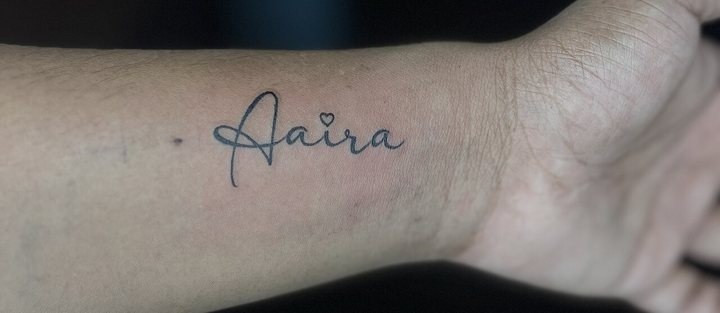
Use overlapping blooms and leaves to follow a narrow old name, checking the gaps between stems against each letter.
Focal subject + background
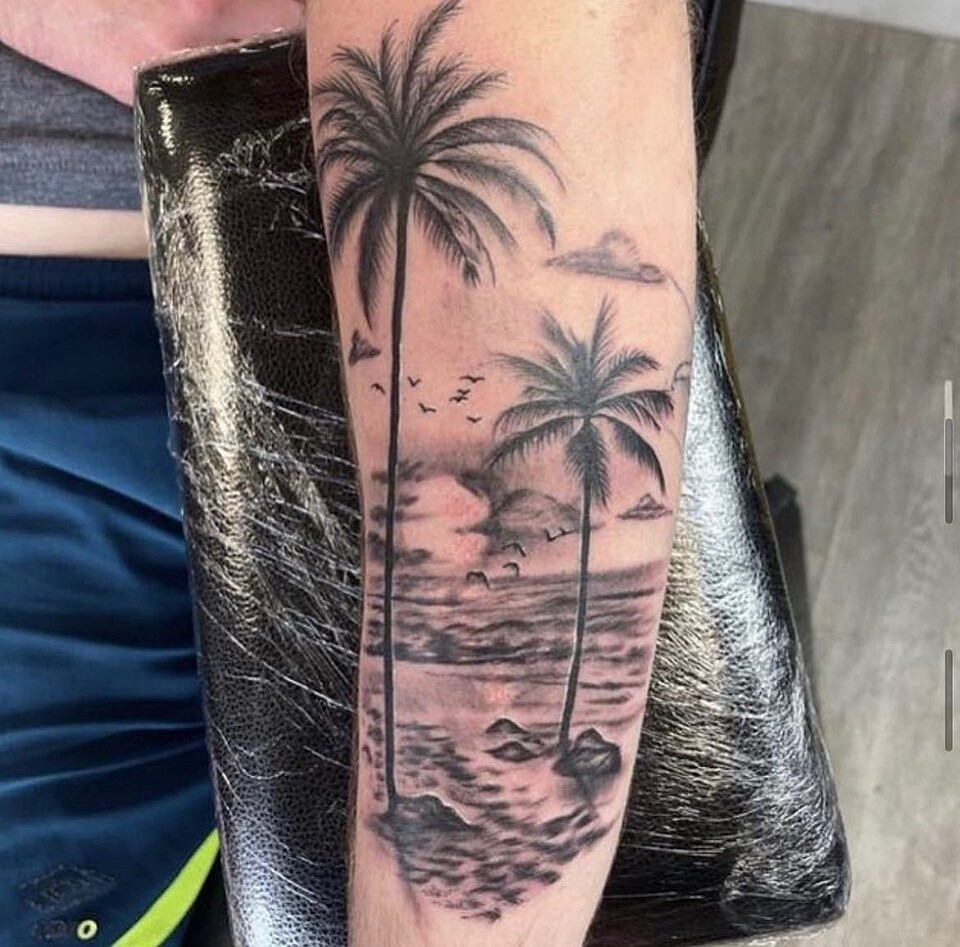
Place an animal, bird or other readable subject in the available lighter area and use dark ground over the densest old ink.
Connected ornamental wrap
Compare panels or flowing blackwork around scattered marks. Keep intentional open skin where there is no old ink to hide.
What should I ask about cost?
Ask for separate scopes for a contained forearm piece and a half-sleeve or wrap. Confirm whether the inner arm, side connections and later adjustments are included in the quote.
Use the cover-up quote checklist.
Can I plan a future sleeve at the same time?
Tell the artist if you expect to extend the piece later. They can discuss boundaries and connecting elements now, even if the first appointment only addresses the existing tattoo. A single photo preview cannot establish the complete sleeve plan.
AI concepts are planning references. Your artist must assess and adapt the design; the preview is not a promise of coverage or a medical assessment.
FAQ
Can an inner-forearm name become an outer-forearm design?
A larger connected composition may include both surfaces, but an outer-arm focal point alone does not cover inner-arm lettering. Ask the artist to show the full wrap and shading plan.
Does a forearm cover-up have to reach the wrist?
No. The finished boundary depends on the old ink and the composition you agree on. Compare a contained option before choosing an extension toward the hand or elbow.