3 checks for a skull composition
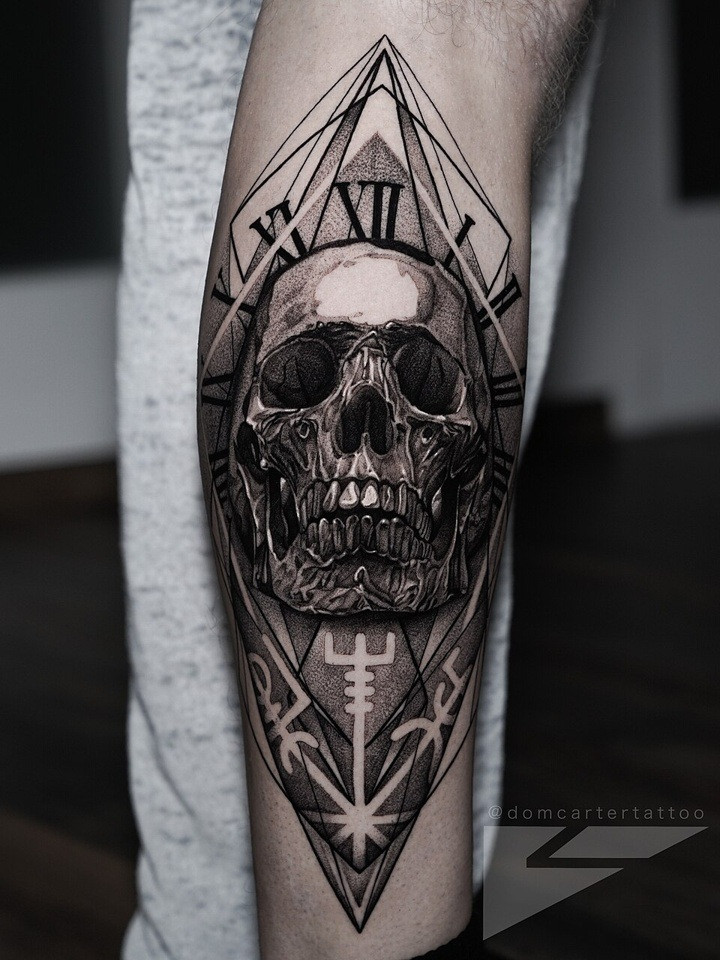
- Keep bone highlights off dense old ink — Map the forehead, cheekbones and teeth against the existing tattoo. A bright digital skull can paint over those marks on screen without showing how they would read through tattoo pigment.
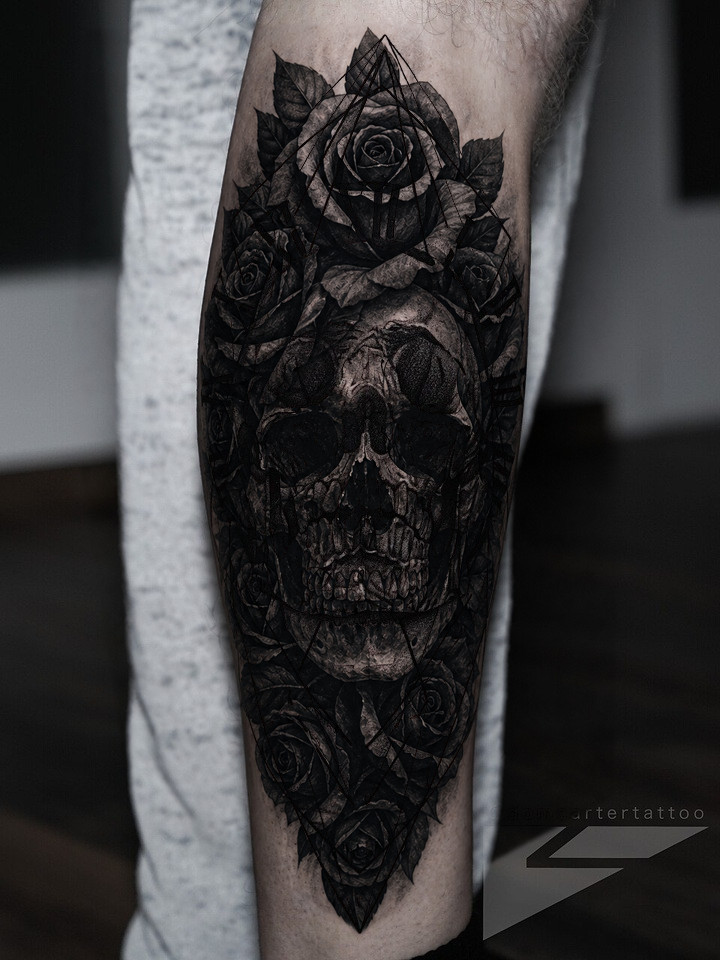
- Use sockets and background deliberately — Eye sockets, the nasal opening and surrounding foliage provide possible darker areas. They still need to align with the old marks; picking a skull motif does not make that alignment automatic.
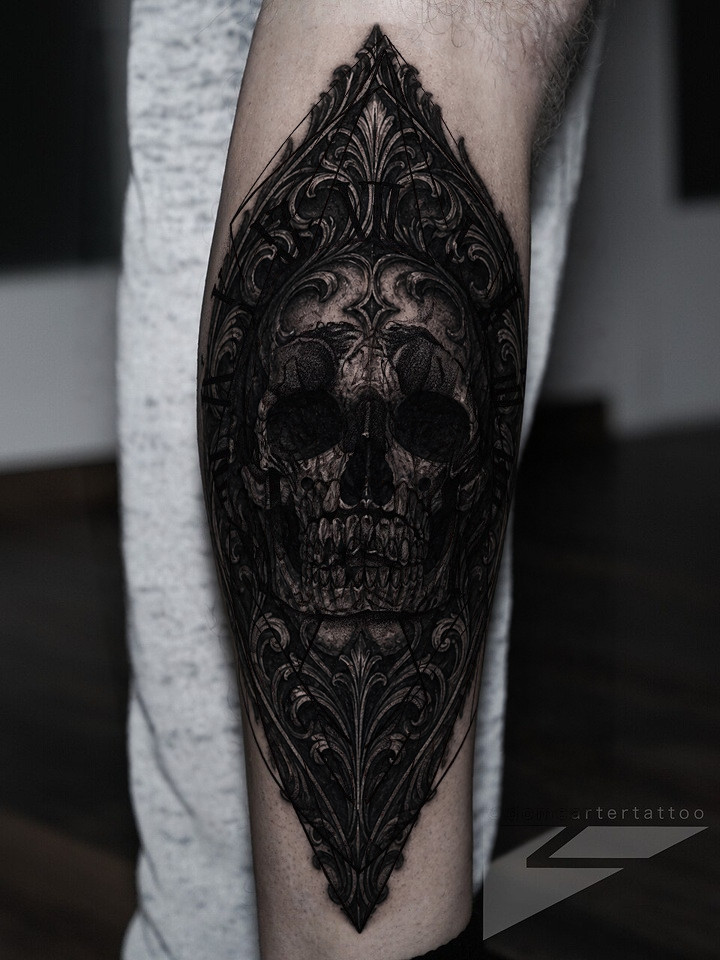
- Compare the whole outline — Check the jaw, crown and any old ink outside them. A rose, leaf cluster or ornamental surround may be part of the design, rather than optional decoration added after the quote.
Three skull directions to discuss
Angled skull + dark ground
Compare a three-quarter pose with a frontal skull. Rotating the subject changes where the sockets, jaw shadows and lighter bone fall over the old tattoo.
Skull with roses or leaves
Use the skull as the focal point and denser foliage around lettering or marks that extend beyond its silhouette. Inspect the open spaces between the leaves.
Bold illustrative skull
Try a simplified skull with deliberate filled sections before adding tiny teeth or cracks. Compare its readable shape at the proposed finished size.
What should I ask about cost?
Request a quote for the entire composition, including flowers, ground and extensions required around the skull. Ask the artist to distinguish essential coverage elements from details that can be simplified.
Use the cover-up quote checklist.
Can the skull stay pale?
Show the artist which bone features you want to keep bright and ask them to map the old tattoo underneath. Compare moving the skull, changing its angle or using a darker surrounding composition before settling on a lighter AI overlay.
AI concepts are planning references. Your artist must assess and adapt the design; the preview is not a promise of coverage or a medical assessment.
FAQ
Can a skull cover an old name tattoo?
A skull is a direction to assess if its darker features and supporting ground can account for every letter. A pale forehead or open jaw placed over lettering can leave the name readable.
Does adding more cracks and detail improve coverage?
Detail alone does not establish coverage. The placement and value of larger shaded areas matter; ask the artist to show the plan before judging tiny decorative lines.